Our story
About Larsen
Bread.
A Danish baker, a starter kept alive for years, and a daily ritual worth preserving — baked fresh in Miami.
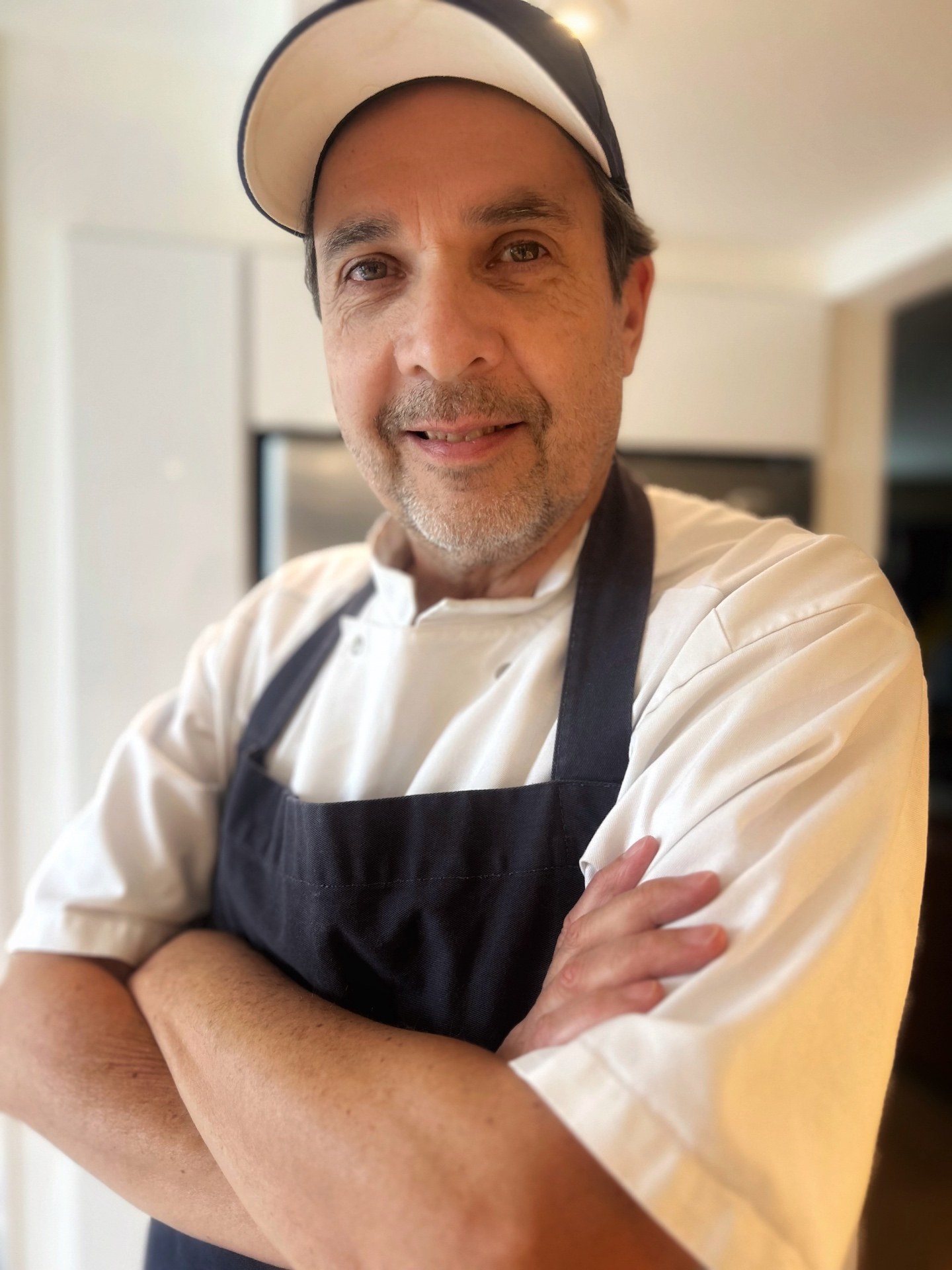
I'm Nicolas
Growing up in Denmark, rugbrød was on the table every single day — at breakfast, at lunch, as an after-school snack. It's not just bread. It's a ritual that anchors a Danish day, a quiet constant the way coffee is in Italy or rice is in Japan.
After more than 20 years in Miami, I realized the real thing was nowhere to be found. There were "rye breads" on grocery shelves, but none of them were rugbrød. Most were soft, sweet, yeast-risen loaves with caraway seeds — closer to American deli rye than to anything I grew up eating. I missed it more than I expected to.
So I started baking. Not because I wanted to start a business, but because I wanted to taste home.
Why I Bake
I've lived in Miami for two decades. I have a partner here, a life here, work here. But there is a particular kind of longing that doesn't go away with time — the longing for the foods, the language, the small daily rituals of the country you came from.
For a long time I didn't know what to do with that longing. Then I started baking rugbrød, and something shifted. When I'm standing in my kitchen at five in the morning, weighing rye flour and feeding the sourdough starter, the longing gets smaller. I am not missing Denmark in the abstract — I am literally holding Danish culture and tradition in my hands.
That is what Larsen Bread is, before it is anything else. It is a way of bringing something real across an ocean.
What Makes Real Rugbrød
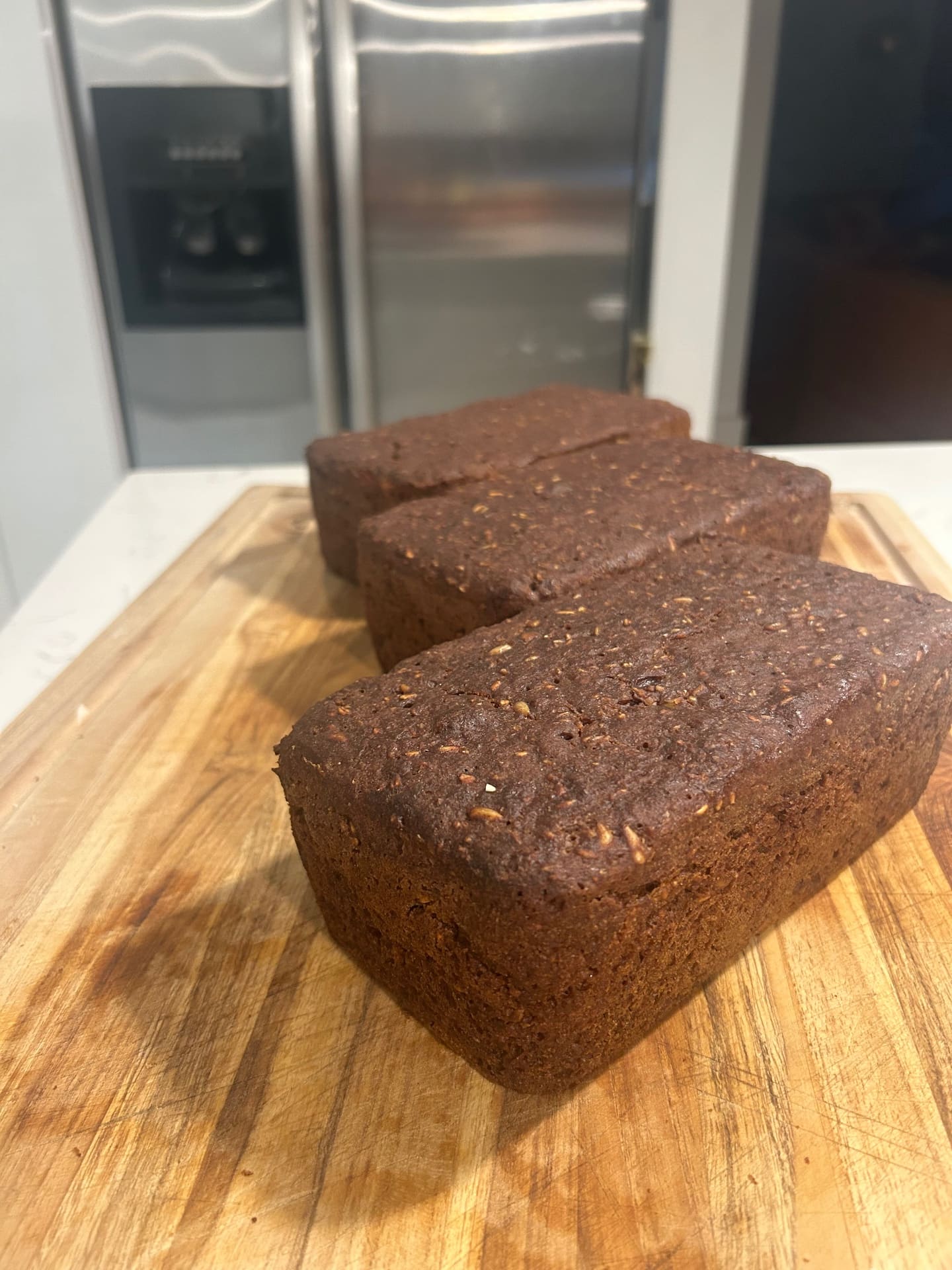
Rugbrød is one of the most misunderstood breads in America. People hear "rye bread" and picture a soft, light loaf with caraway. Real Danish rugbrød is almost the opposite.
It is dense, dark, and packed with whole rye kernels and seeds. It contains no oil or commercial yeast and includes a touch of molasses. It is leavened entirely by sourdough — wild yeast and lactic acid bacteria living in a starter that's been kept alive for years. The dough ferments slowly, for approximately 9 hours in total, which is what gives the bread its deep, malty, slightly tangy flavor and its remarkable shelf life.
A loaf of real rugbrød will keep for a week or more. The flavor improves on the second and third day. It is meant to be sliced thin, buttered generously, and built up into smørrebrød — the open-faced sandwiches that are the foundation of Danish lunch culture.
How I Bake
Every loaf at Larsen Bread is made the way it has always been done in Denmark.
100% sourdough. No commercial yeast, ever. The starter is the heart of the bakery. I feed it daily and watch its pH carefully — between 4.0 and 4.5 — because that is what guarantees the right balance of acidity, structure, and flavor.
Long fermentation. Fermentation takes approximately 9 hours in total. After baking, each loaf rests for 24 hours so the crumb can set before slicing.
Real ingredients. Dark rye flour and rye chops from Central Milling. Whole-grain wheat for structure. Sunflower seeds and flax seeds. A touch of molasses and a small amount of dark malt flour for color and depth. Salt, water, and the starter. That's it. Contains rye and wheat.
No shortcuts. No oils to soften the crumb. No stabilizers or preservatives. The bread is what it is — exactly what my grandparents would recognize.
Each loaf bakes at a moderate temperature for the first stage with a damp cover, then uncovered to set the crust. It comes out when the internal temperature hits 208–210°F, the way it should. Then it cools, rests, and is vacuum-sealed to preserve freshness for the journey to your home.
Shipped Across the U.S.
Larsen Bread ships nationally from Miami. Every loaf is baked to order, vacuum-sealed within hours of cooling, and packed in a way that protects the bread through transit. I started by shipping to Danish friends and acquaintances around the country who were as homesick for rugbrød as I had been. Word spread. Now I send loaves to customers from Florida to Alaska.
If you grew up with rugbrød, you'll recognize this bread immediately. If you didn't, I hope it gives you a small window into a Danish breakfast table.
Why Small, Why Slow
I could bake faster. I could use commercial yeast and cut the fermentation time. I could add stabilizers and stretch the shelf life. I could outsource production to a contract bakery and ship 10 times the volume.
I won't.
This is not because I am romantic about hardship. It's because the slowness is the bread. The approximately 9-hour ferment is what makes rugbrød taste like rugbrød. The hand-built process is what makes it real. If I cut those corners, I would be selling something that wears the name "rugbrød" but isn't.
Denmark has a long tradition of doing things slowly and well. Of choosing the harder path because it leads to the better thing. Hyggelig is the word people borrow from us, but grundighed — thoroughness, depth, doing the work properly — is closer to the soul of it.
That's the spirit I'm trying to keep alive, one loaf at a time, in a kitchen in Miami a long way from where it began.
— Nicolas Larsen
Ready to taste it?
See breads & prices.
A single loaf is $15. Two loaves are $25 — the $5 offer is applied in the cart. Baked fresh in Miami and shipped nationwide.